

Glove Box Design Recommendations
Key Attributes of the design:
- The design uses an Electronic Solenoid Actuator with choice of magnetic mechanical latch.
- A 12V DC solenoid drives the mechanism.
- Can be controlled by the BCM or just simpler local control like a regular glove box.
- The module can interface directly with the vehicle’s BCM.
- Glove boxes can wirelessly integrate with the vehicle’s digital key and proximity sensors- through the body control system.
- High-speed network commands route to a localized body control module (BCM) via the vehicle’s central CAN or Ethernet backbone.
- The BCM then sends a low-voltage signal over a localized LIN (Local Interconnect Network) bus to trigger the latch relay.
- The actuator is powered by the vehicle’s low voltage 12V architecture
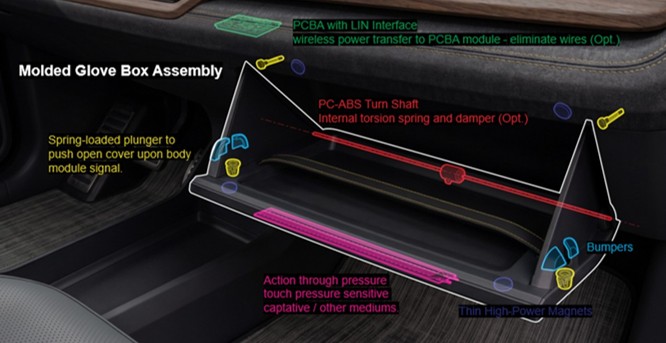
The permanent magnets (on the door) hold it shut passively without power needed. When you tap open on the screen, the car pulses a quick electric signal to the solenoid (a tiny electromagnet plunger hidden inside the glovebox assembly).
That plunger extends just for a split second and pushes against a link rod or the door itself, giving it enough outward force to break the magnetic grip. Once popped, gravity and a damper let it swing down.
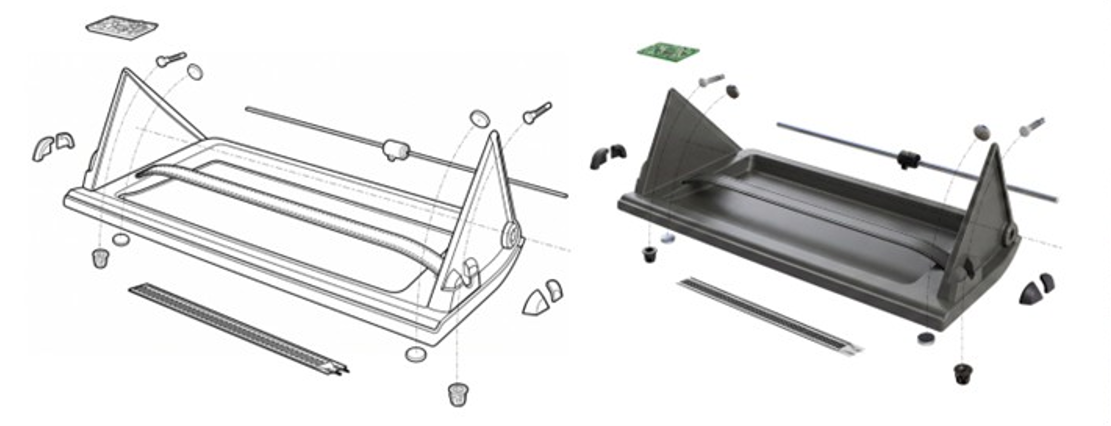
Option 1- Glove box which closes due to two magnets and opening can be simple pull opening hidden on the top of glove box. You can add a sliding out function if you want to pull out the floor with minimal cost add. Cost target < $8.00.
Option 2: Electronic lock with combination of capacitive and pressure sensor touch in the center. No wiring as power for the sensor through coin cell batteries; like key FOB). Locking feature options are many. Cost target < $14.50.
Option 3: Wired signal to the electronic lock assembly that pushes the cover open. Wiring & Assembly cost add $2.50.
Option 4: Key FOB Wireless data transmission between the lock electronics and the push out plungers (consider Ford wireless door mounted keypad as example).
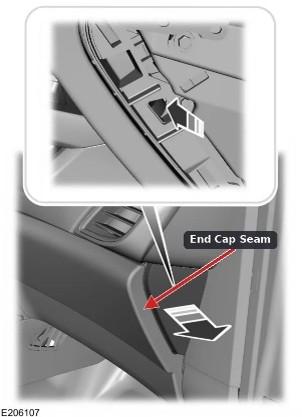
Just as reference for comparison Modern Lincoln Vehicles replace traditional mechanical handles with a sleek, handle-free dashboard design. Instead of a pull-latch, they use an electronic release button mounted on the center stack or instrument panel to unlatch the compartment smoothly.
The Lincoln Glove Box has an Electronic Push-Button with a dedicated dashboard button triggers the motorized or solenoid latch rather than a physical handle. Internal dampers ensure the glove box door opens in a controlled, fluid motion instead of dropping abruptly. Integrated Lighting: Built-in interior lighting illuminates the storage area automatically when opened.
Electronic glove box systems use an actuator motor, solenoid, or electromagnetic switch instead of a mechanical latch. When the button (often via the touchscreen or voice command) is pushed, it triggers a release that lets the hinges pivot.
Vehicles like the Volvo EX30 or Tesla models rely entirely on software commands. To access the compartment, the passenger or driver must tap a dedicated “Glove Box” button within the central touchscreen infotainment menu, which triggers an electronic solenoid to release the door catch. These electronic systems can also be linked to the vehicle’s security settings, letting drivers lock the glove box with a digital PIN code to prevent valet or break-in theft.
