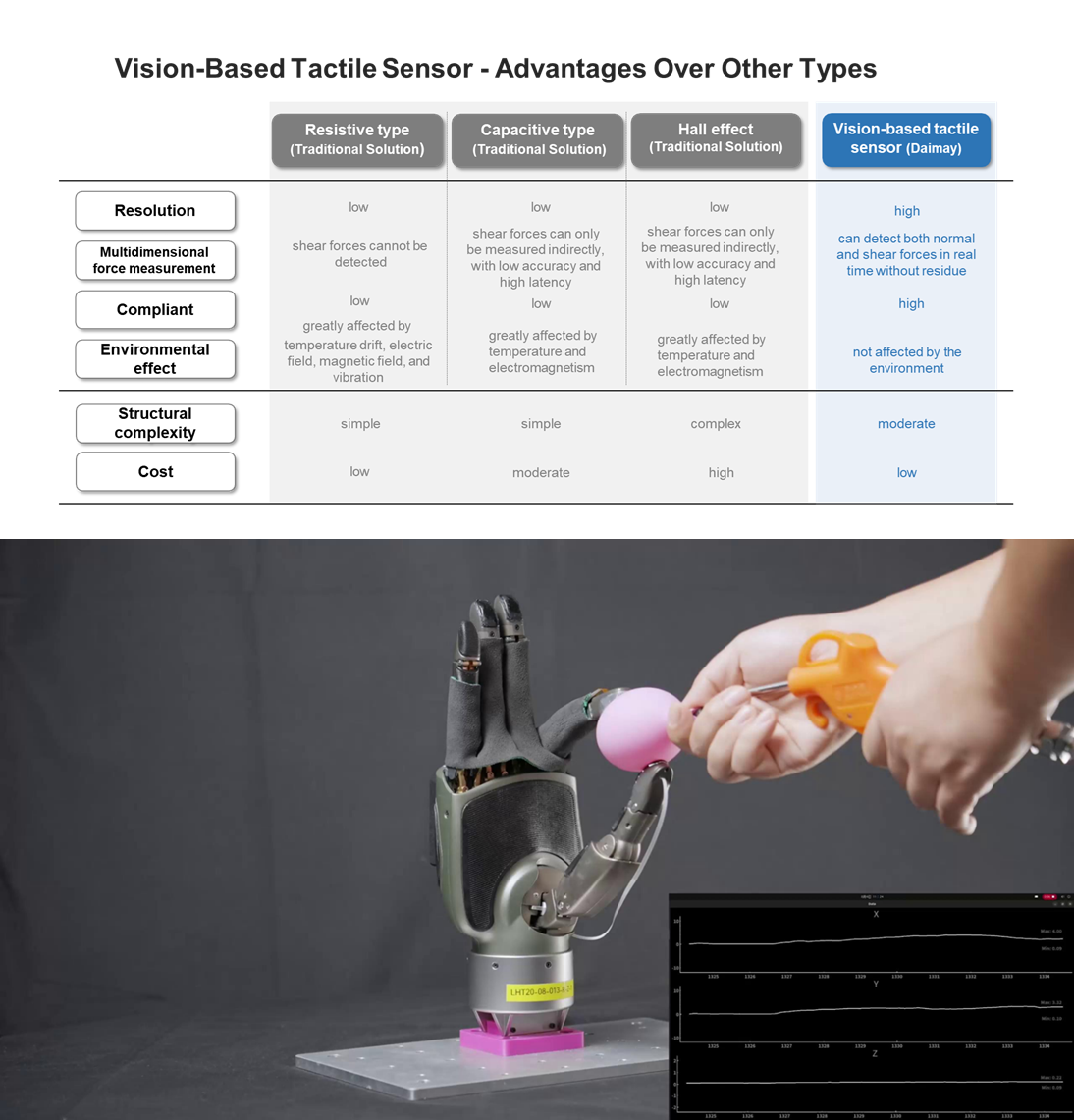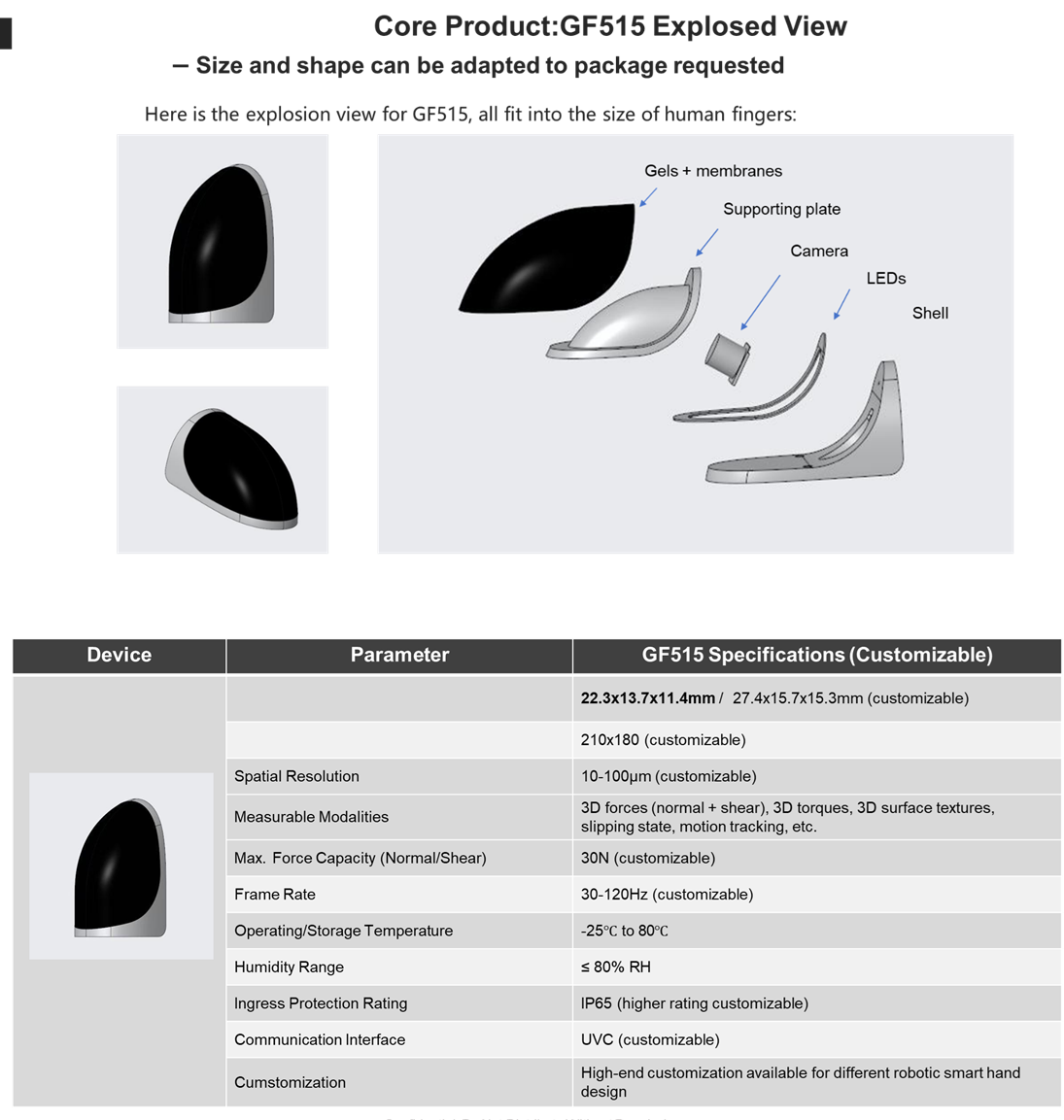

Daimay tactile sensor is vision based. It generates a camera system that converts elastomer deformation into precise part geometry mapping and applied force measurement. This is advanced technology than traditional capacitor/resistor sensor which hard to read shear force and parts geometry.
- A transparent elastomer “skin” deforms when it contacts an object (normal + shear loads).
- An embedded camera views the inner surface, typically with a thin reflective coating and/or a marker pattern.
- Controlled illumination (often multi-color LEDs) maps deformation into image intensity and color changes.
- Computer vision algorithm estimates displacement and depth maps.
- Model reconstructs multi-dimensional contact patch, 3D mesh, and force/torque distribution.
Advantages:
- Extremely high resolution, exceeding human fingertips
- It provides extremely detailed, accurate, and repeatable surface data at the 10-micron level in real time, with 10,000x higher resolution than traditional tactile sensors.
- Highly compliant operation and high durability.
- It is compliant like human skins and can handle all kinds of objects with different degrees of softness and hardness, and has strong durability, not easy to age and break
- Highly robust to various operating conditions.
- It is not affected by environmental factors such as temperature, humidity, electromagnetism, etc., and can handle any surface type of material under any lighting conditions