

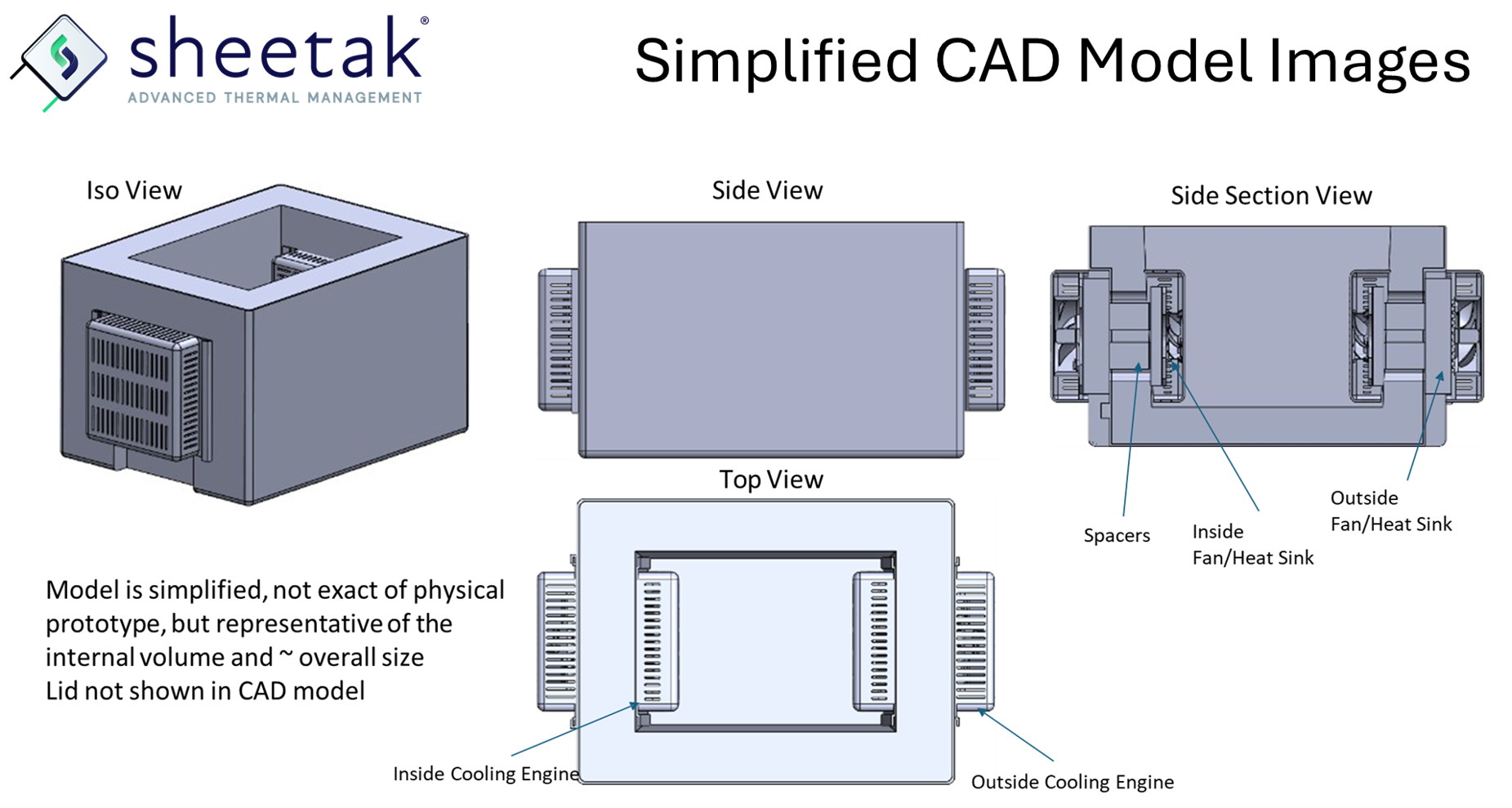
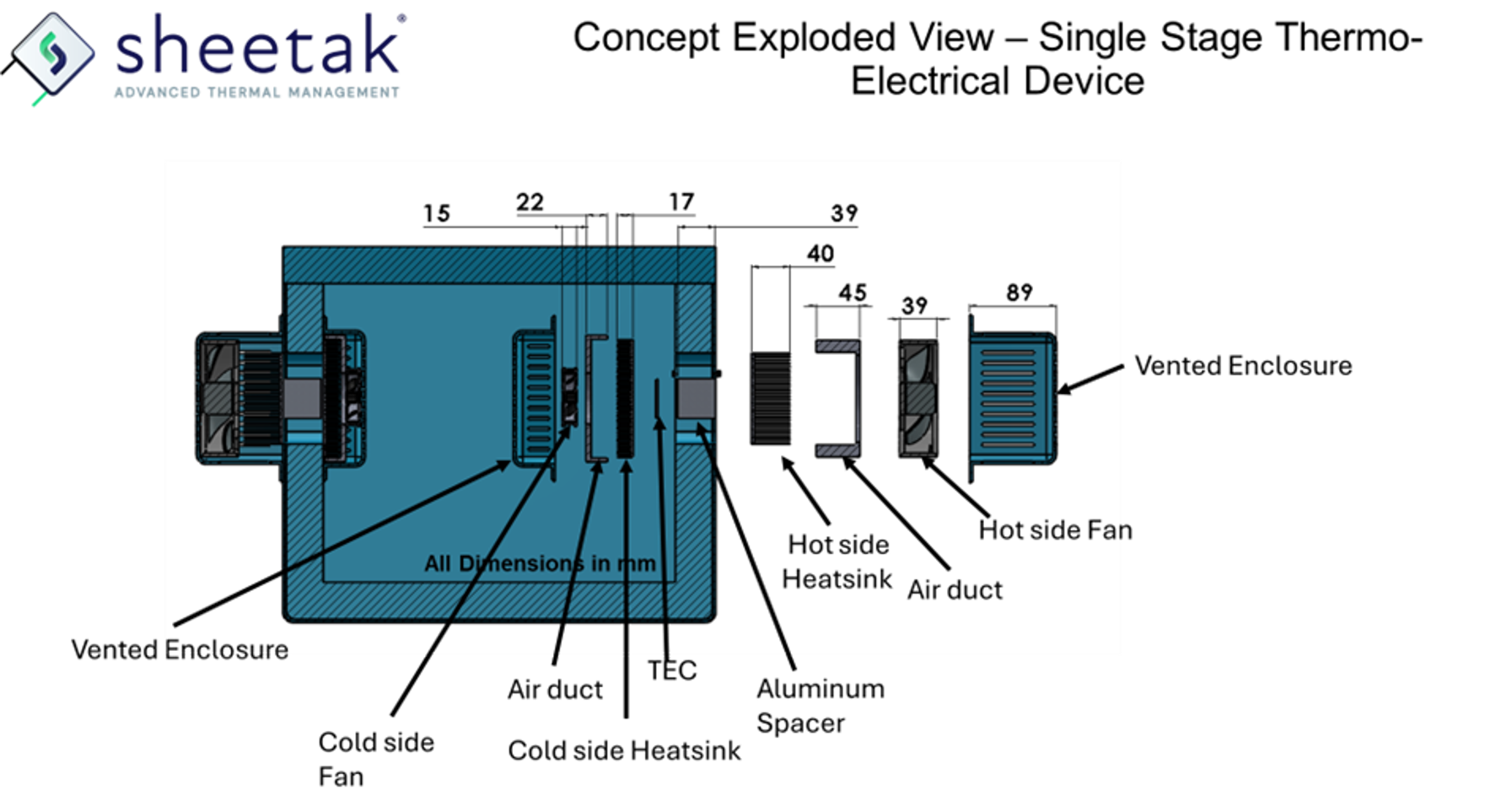
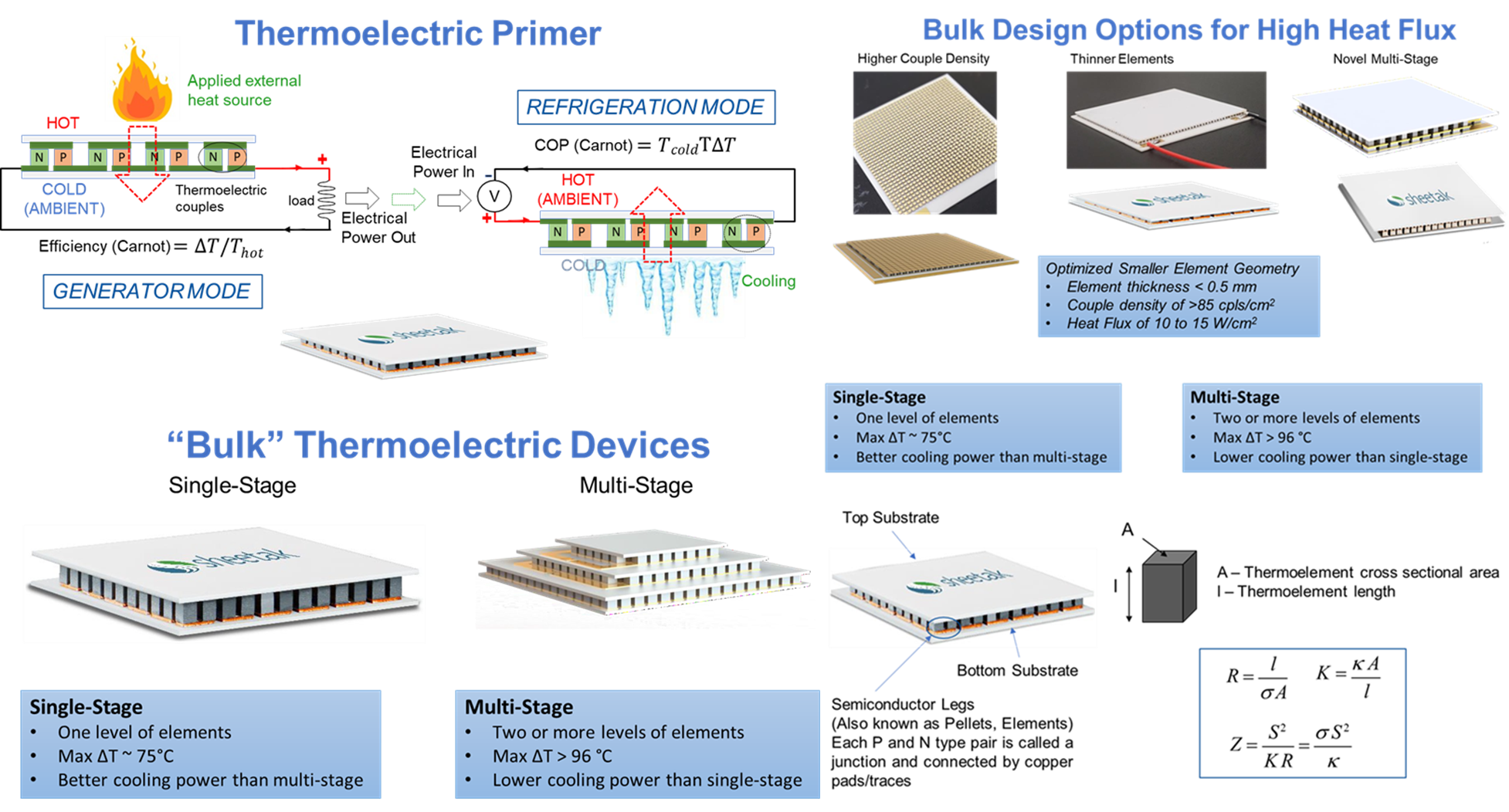
Heat naturally flows down a temperature gradient from hot to cold. A thermoelectric module’s ability to move heat from cold to hot in a solid-state fashion is unique.
Thermoelectric coolers (TECs), also known as Peltier coolers, are solid-state heat pumps that leverage the Peltier effect to transfer heat f side of the device to the other. As a compact, silent, and highly controllable thermal management solution,
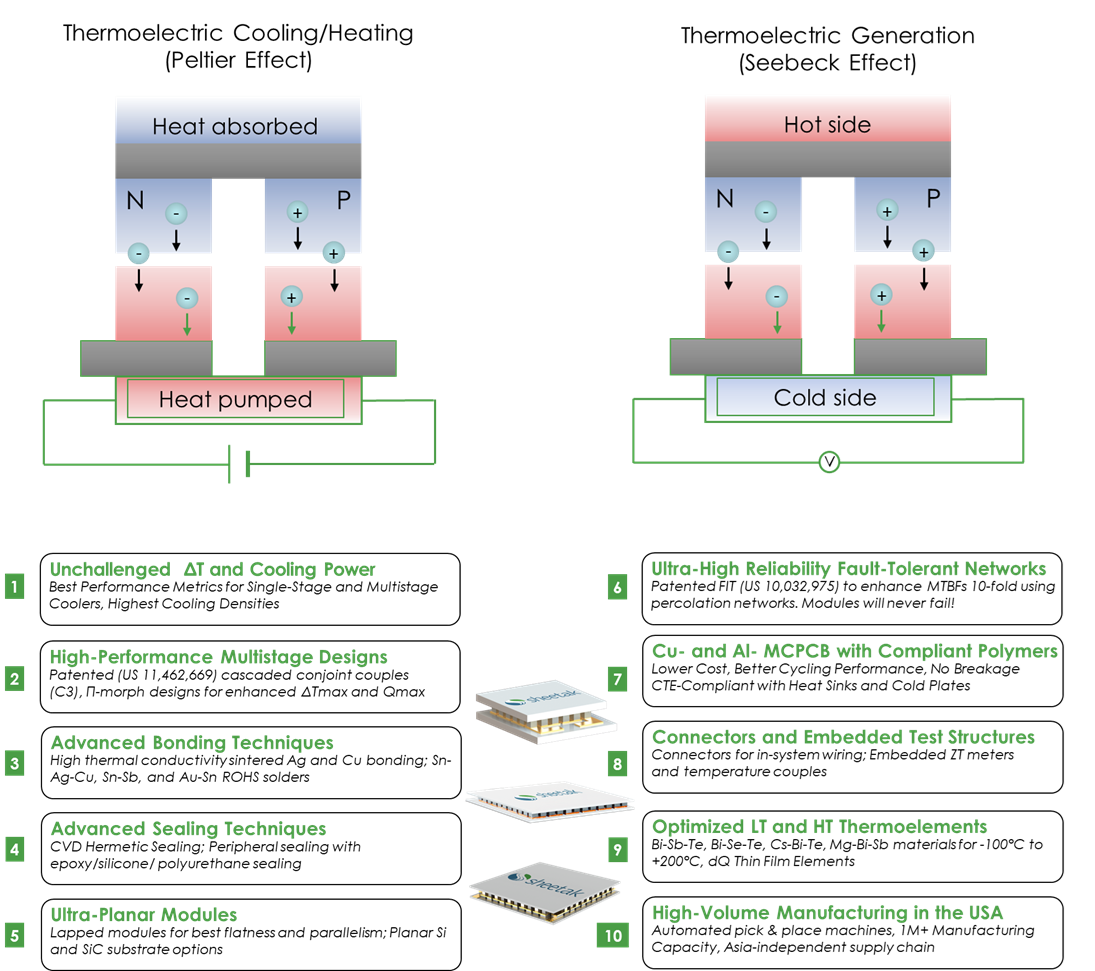
At their core, thermoelectric coolers (TECs) are solid-state devices constructed from a carefully arranged array of p-type and n-type semi elements, which are the fundamental building blocks of thermoelectric functionality. These elements are typically made from bismuth te (Bi₂Te₃) or other advanced thermoelectric materials optimized for efficient heat pumping.
QOOLSENSE™ is a compact benchtop thermal chamber that enables precise, repeatable temperature control for thermal characterization and cycling of optoelectronic, photonic, and low-power electronic devices.
Sheetak’s CENTUM® C3 thermoelectric chip, it delivers fast, efficient heating and cooling without compressors or refrigerants for streamlined validation and performance testing.

1. Compact Size 5 x 3 x 3.2 Inch (12.7 x 7.6 x 8.1 cm).
2. Wide Temperature Range: -30°C to 90°C.
3. Fast Ramp Rates: Cools at >2°C/min | Heats at <10°C/min.
4. Swappable Mounting Plates for Multi-Device Testing.
5. Transparent Glass Viewing Window.
6. Includes External Controller.
7. Removable Cable Feedthrough for Powering Devices.
8. Moisture Purging System.
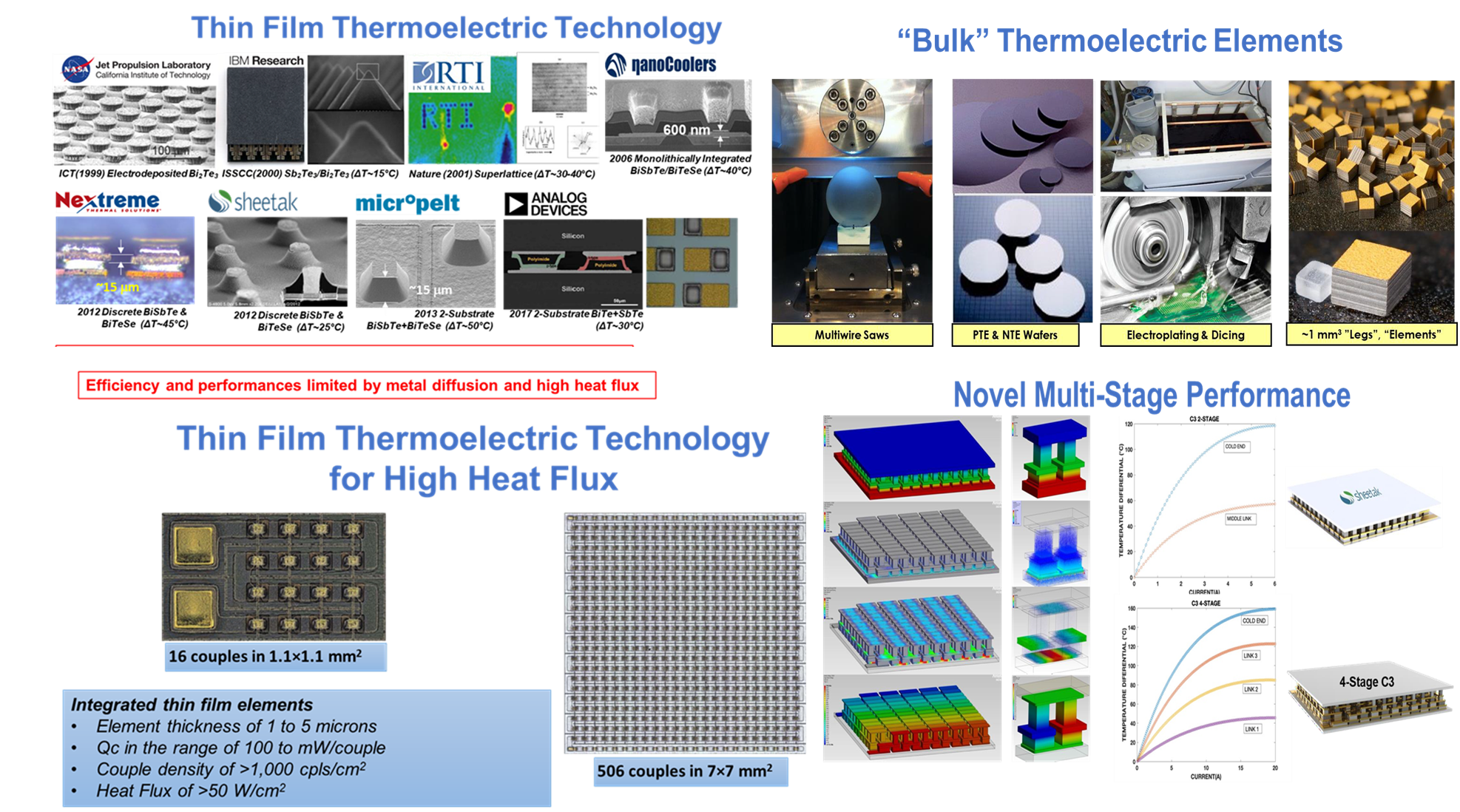
At the frontier of thermoelectric innovation, thin-film TECs utilize semiconductor microfabrication techniques to produce ultra-compact, performance coolers. These devices feature micrometer-scale thermoelectric structures deposited on substrates like silicon or flexible p
- Ultra-thin profiles (down to hundreds of microns)
- High heat flux density and rapid thermal response MEMS
- Flexible electronics compatibility
- Lower power consumption compared to traditional TECs

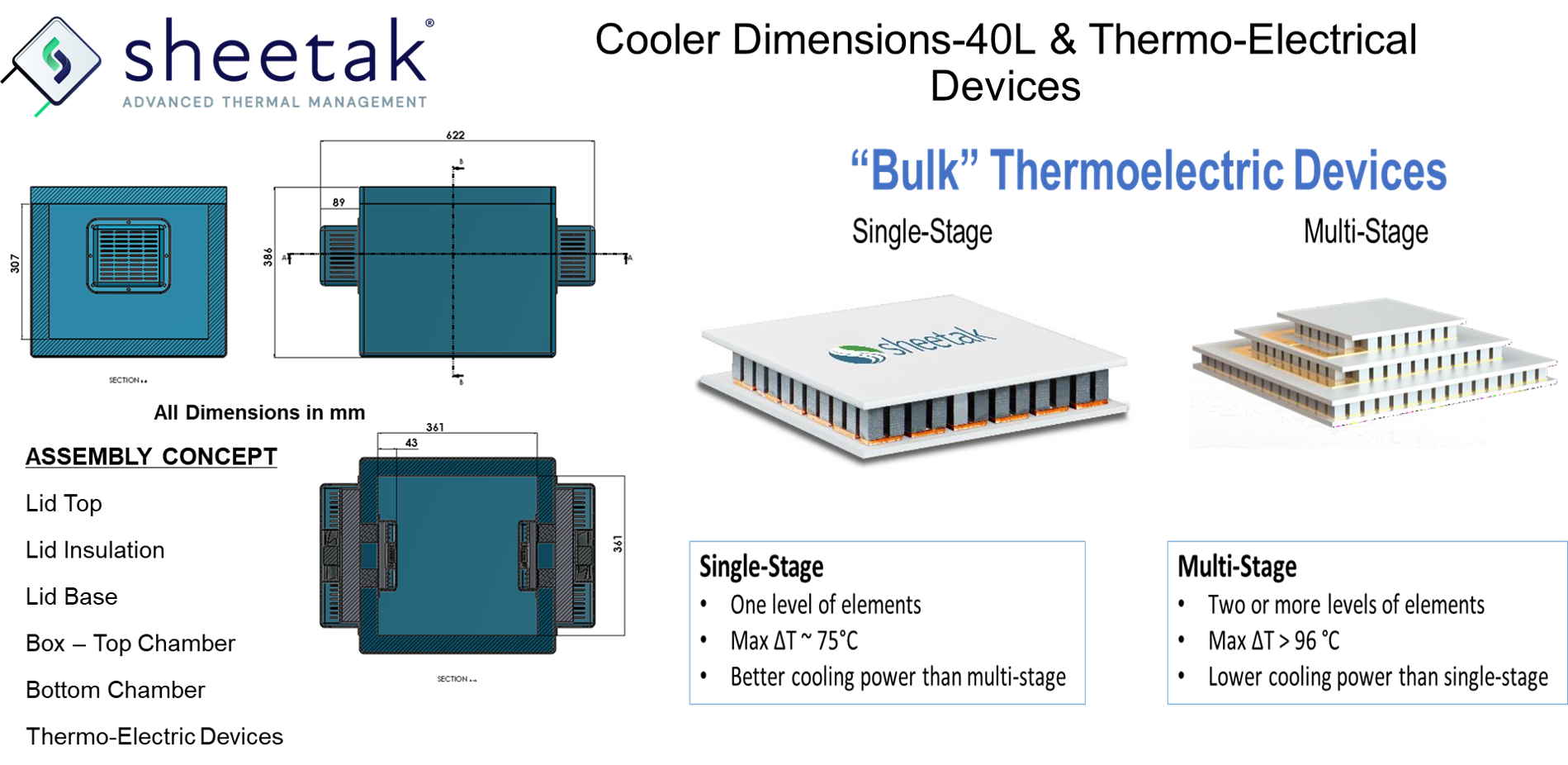
The temperature difference in a thermoelectric cooler can achieve is heavily influenced by its architecture. In a single-stage TEC, a single thermoelectric junction provides the entire cooling lift, making it simpler, more compact, and typically more efficient at moderate Tempe differentials. Sheetak’s single-stage TECs can reach a ΔT of up to 83°C under ideal conditions. For applications that require more extreme multi-stage TECs are used. These devices stack multiple TEC elements in series, each stage cooling the next. This approach increases the ΔT at the cost of higher input power and reduces coefficient of performance. Sheetak’s multi-stage TECs can achieve ΔTs as high as 110°them suitable for deep cooling tasks such as IR sensor stabilization or lab-grade instrumentation.
For more information Click https://sheetak.com/.
ROTOMOLDED VS. INJECTION-MOLDED COOLERS
Unlike injection molded coolers the roto molding process ensures consistency and durability. Liquid insulation is poured into a mold, and the cooler is spun (almost like a rotisserie chicken) until the insulation has hardened.
Rotomolded coolers are heavier than injection-molded coolers because of their thick, durable construction, which provides superior insulation.
Cost: While rotomolded coolers may have a higher upfront cost, their durability and long lifespan make them cost-effective in the long run.
Appearance: Rotomolded coolers go through the rotational molding process, allowing for more intricate designs and customization options, resulting in a wider variety of shapes, colors, and finishes compared to injection-molded coolers.
INJECTION MOLDED COOLERS
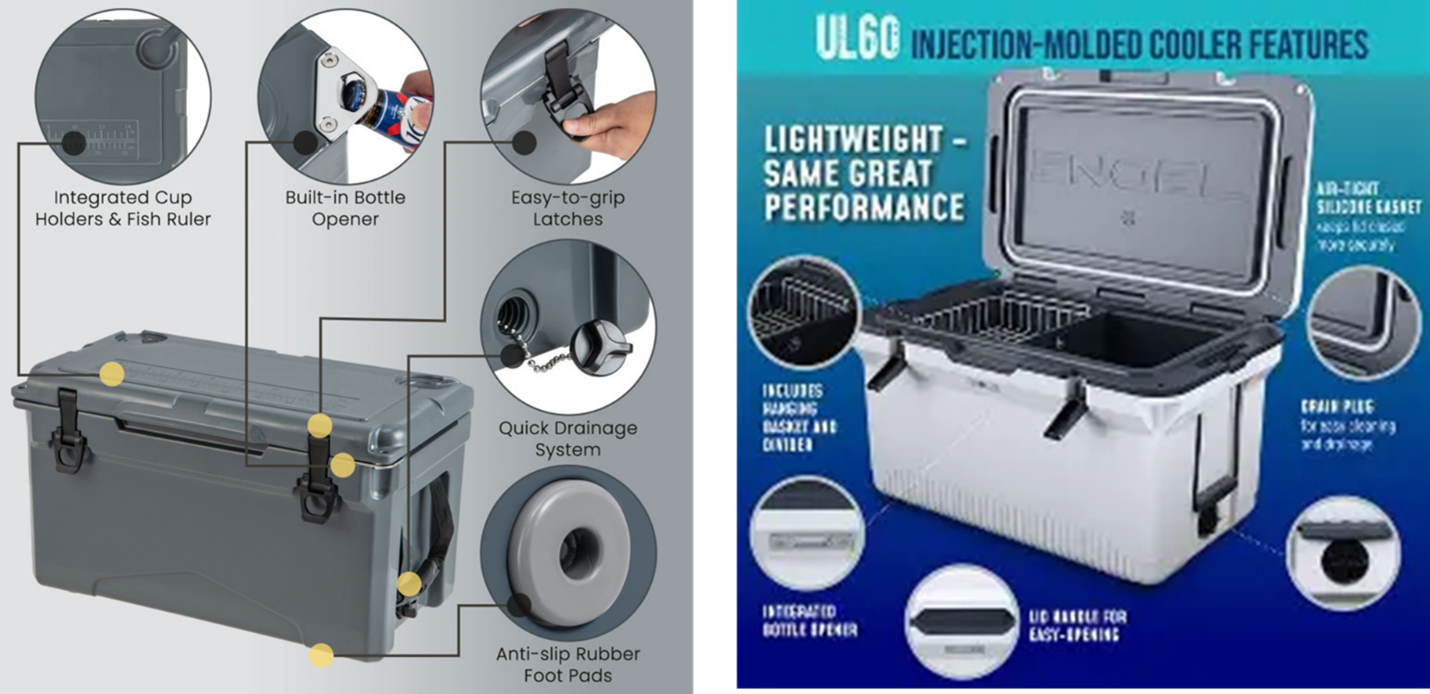
Injection molded coolers are constructed by manufacturing separate inner and outer shells using molten plastic (typically polypropylene) injected into steel molds at high pressure. These shells are then assembled, and the cavity between them is filled with expanding polyurethane foam for insulation.
Two-Piece Design: Unlike one-piece rotomolded coolers, injection-molded coolers consist of separate, distinct inner and outer shells that are joined together.
Insulation: Polyurethane (PU) foam is injected between the walls, which expands to provide insulation.
Structural Seams: The seams where the two shells are fused can be potential weak points, making them generally less durable than rotomolded alternatives.
Material: Often constructed from stiffer plastics like polypropylene (PP) or ABS, which can allow for thinner, lighter, but sometimes less impact-resistant walls compared to polyethylene.
While injection-molded coolers generally offer better, more detailed finishes and faster production times, they may offer less robust durability and insulation performance compared to thicker, one-piece rotomolded models.
